
-
Home
- iPods
-
Materials for artists
- Oil Paints
- Oil Solid
- Hydr-Oil
- Water-Based Paints
- Farby Amatorskie
- Farby graficzne i specjalistyczne
- Płyny malarskie
- produkty do decoupage oraz przedmioty do ozdabiania
-
pędzle
-
Synthetic brushes
- Pędzle Renesans do chlapania 3201
- Pędzle 3020 MOP
- Pędzle Renesans 1001
- Pędzle Renesans 1005
- Pędzel Renesans 1006
- 1007 series
- PĘDZLE RENESANS 3088D
- Pędzle Renesans 1010
- Pędzle Renesans 1086
- Series 1094
- Pędzle Renesans 1097
- Series 1099
- Pędzle Renesans 1108
- Seria 112
- PĘDZLE RENESANS 1120
- 1530S to 1580S series
- 1200 Series
- Seria 3090A, złoty syntetyk, drewniana naturalna rączka
- Pędzle Renesans 4701
- 8015 series
- Pędzle 8020
- 8044 series
- Series 8079
- Pędzle 86960
- Pędzle Renesans 87150
- Pedzle Renesans Roll Brush
- Pędzle TravelBrush
- Natural brushes
- Brush sets
- Pedzle gąbkowe
- Filling brushes
- Articles by Borciani & Bonazzi;
-
Synthetic brushes
- pastele, węgiel, ołówki i kredki
-
szpachelki i akcesoria malarski
- Renesans Paint Spatulas
- Containers and brush accessories
- Painting putty knives made in China
- Restoration spatulas
- Wooden modeling spatulas
- Other spatulas
- Plaster tools
- Chisels and gouges
- Komplet domodelowania gliny (CS8A)
- Wooden paint trays
- Metalowe puste pudełka do akwareli
- Wooden pallets
- Plastic pallets
- Paper pallets
- Porcelain palettes
- Tubes for drawings
- Canvas stretching pliers
- Cups
- Printing rollers
- Wooden mannequins and models
- Airbrushes
- Other accessories
- Ucieraki
- Linocut supplies
- płótno zagruntowane, podobrazia i tablice
- Wooden and metal easels
- Gold plating products
- Conservation products
- Paper and pads
- PISAKI
-
Articles by "Manuscript"
-
Calligraphy
- Calligraphy pens - sets
- Classic - Classic Fountain Pen Nibs
- Calligraphy pen sets with S-nibs
- Cartridges - packaging
- Inks
- Ink for fountain pens - non-waterproof
- Tłoczki
- Calligraphy supplies
- Calligraphy kits
- Creative calligraphy
- Gift sets
- Nib sets for frames
- Leonhardt - nibs for casts & accessories
- Chinese calligraphy
- Nib holders
- Lettering
- Lak
- The Lionheart Collection
-
Calligraphy
- Products from "MARUMAN"
- Lighting
- Gift certificates
-
Framing supplies and mat boards
- Kartony do paspartout firmy Moorman i inne
- Conservation passepartout cartons
- ARTITEQ Systems
- Tektura ESKABORD
- taśmy bezkwasowe do passepartout wiedeńskiego
-
Hangers and hardware
- Triangular pendants
- Classic hard tags
- Adjustable pendants with holes
- Corner fittings
- Zawieszki ząbkowane włoskie
- Rounded pendants
- "Ultra-heavy" pendants
- Anti-theft hardware
- Wood screws
- Brass nails
- Steel cable
- Cable clamp
- Hard plates for mounting canvases
- Blaszki miękkie do mocoania podobrazi
- Pozostałw zawieszki
- The BLITZ System
- Other frame accessories
- Foam sheets
- Machines and equipment for picture framing
- Sales
- Wooden frame strips and plastic inserts
- Picture framing
- Nowości - listwy
- Varnishes and spray media
- Pastels
- crayons
- pencils per piece
- Gold and silver flakes
- schagmetal and schagaluminium
- Outdoor easels
- Masses
- Pastes
- Gels
- Pistons
- caps
- Sub-images
- canvas and painting boards
- iPods
- Sales
-
Materials for artists
- Oil Paints
- Oil Solid
- Hydr-Oil
- Water-Based Paints
- Farby Amatorskie
- Farby graficzne i specjalistyczne
- Płyny malarskie
- produkty do decoupage oraz przedmioty do ozdabiania
-
pędzle
-
Synthetic brushes
- Pędzle Renesans do chlapania 3201
- Pędzle 3020 MOP
- Pędzle Renesans 1001
- Pędzle Renesans 1005
- Pędzel Renesans 1006
- 1007 series
- PĘDZLE RENESANS 3088D
- Pędzle Renesans 1010
- Pędzle Renesans 1086
- Series 1094
- Pędzle Renesans 1097
- Series 1099
- Pędzle Renesans 1108
- Seria 112
- PĘDZLE RENESANS 1120
- 1530S to 1580S series
- 1200 Series
- Seria 3090A, złoty syntetyk, drewniana naturalna rączka
- Pędzle Renesans 4701
- 8015 series
- Pędzle 8020
- 8044 series
- Series 8079
- Pędzle 86960
- Pędzle Renesans 87150
- Pedzle Renesans Roll Brush
- Pędzle TravelBrush
- Natural brushes
- Brush sets
- Pedzle gąbkowe
- Filling brushes
- Articles by Borciani & Bonazzi;
-
Synthetic brushes
- pastele, węgiel, ołówki i kredki
-
szpachelki i akcesoria malarski
- Renesans Paint Spatulas
- Containers and brush accessories
- Painting putty knives made in China
- Restoration spatulas
- Wooden modeling spatulas
- Other spatulas
- Plaster tools
- Chisels and gouges
- Komplet domodelowania gliny (CS8A)
- Wooden paint trays
- Metalowe puste pudełka do akwareli
- Wooden pallets
- Plastic pallets
- Paper pallets
- Porcelain palettes
- Tubes for drawings
- Canvas stretching pliers
- Cups
- Printing rollers
- Wooden mannequins and models
- Airbrushes
- Other accessories
- Ucieraki
- Linocut supplies
- płótno zagruntowane, podobrazia i tablice
- Wooden and metal easels
- Gold plating products
- Conservation products
- Paper and pads
- PISAKI
-
Articles by "Manuscript"
-
Calligraphy
- Calligraphy pens - sets
- Classic - Classic Fountain Pen Nibs
- Calligraphy pen sets with S-nibs
- Cartridges - packaging
- Inks
- Ink for fountain pens - non-waterproof
- Tłoczki
- Calligraphy supplies
- Calligraphy kits
- Creative calligraphy
- Gift sets
- Nib sets for frames
- Leonhardt - nibs for casts & accessories
- Chinese calligraphy
- Nib holders
- Lettering
- Lak
- The Lionheart Collection
-
Calligraphy
- Products from "MARUMAN"
- Lighting
- Gift certificates
- Lighting
- Listwy drewniane i aluminiowe
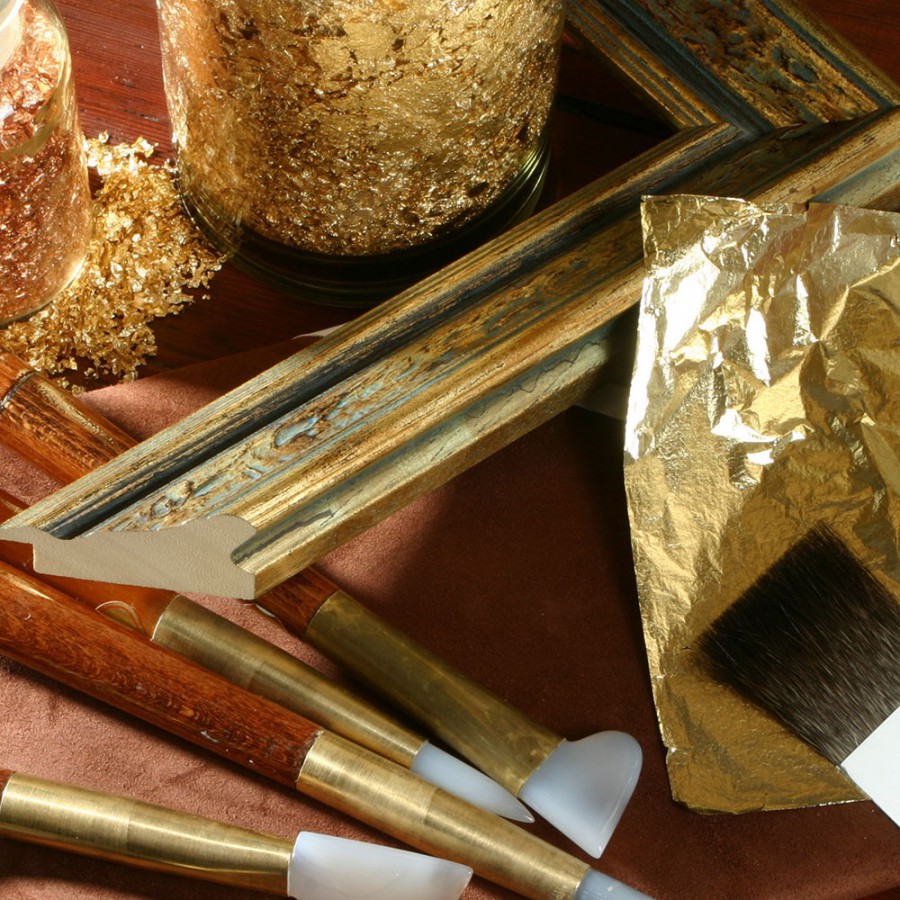
Gold plating products
The gilding technique replaces pure gold at a significantly lower cost than in traditional goldsmithing, while retaining the richness, ornamentation, and splendor...
The gilding technique replaces pure gold at a significantly lower cost than in traditional goldsmithing, while retaining the richness, ornamentation, and splendor characteristic of genuine gold plating. Classic gilding is applied to a primer or a mixture. Gilding on pulment is called the glue or gloss technique, and involves adhering gold leaf to a primer layer, known as pulment. Gilding on mixtion, also known as oil gilding, involves adhering gold leaf to the primer using a specially prepared adhesive, known as mixtion. In both techniques, the surface was often additionally protected, and for this purpose various varnishes were used to deepen or enhance the color of the gilding.
Kategorie
-
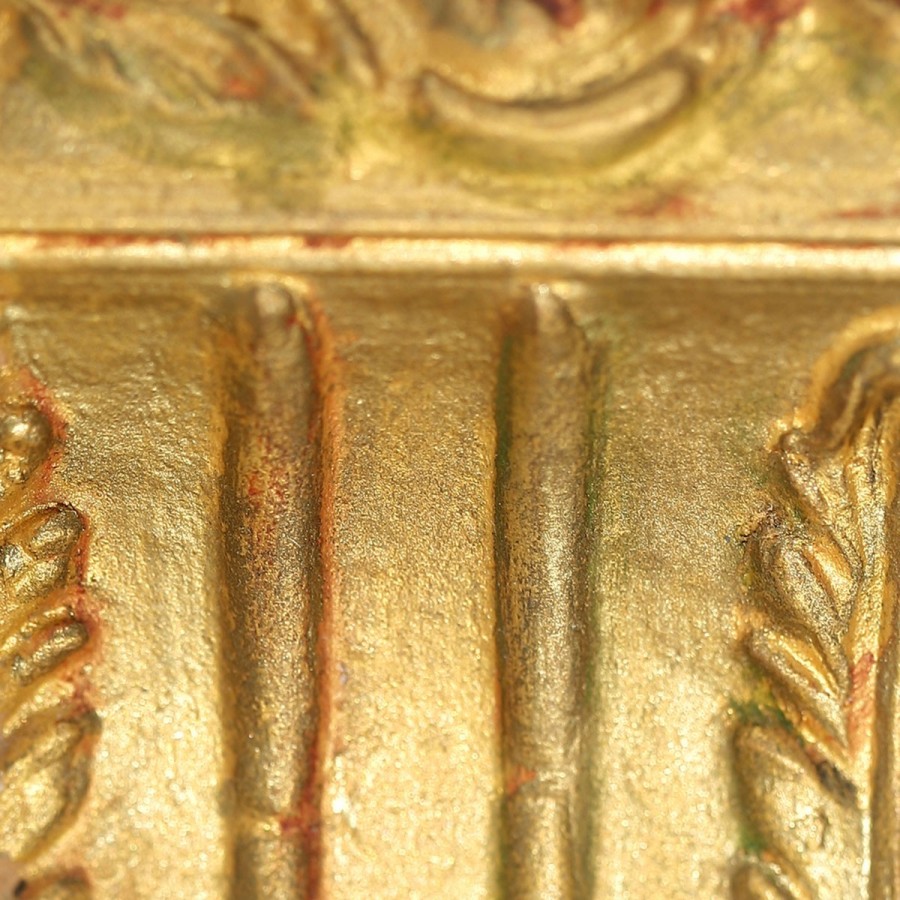
Gilding paints
-

Płatki ze złota i srebra, schlagmetall, aluminium
<p>Before applying the gold, prepare an adhesive mixture—a solution of rubbing alcohol, water, and bone glue in the following proportions: 200 ml of water, 50 ml of rubbing alcohol, and a small amount of bone glue (simply dip the brush into the adhesive solution). The resulting solution must be applied very quickly and only to the areas where the gold leaf will be immediately applied. To apply the gold leaf, the book must be positioned as close as possible to the gilding pad so that the leaf can be placed on it with a decisive flick of the wrist. All work on the leaf should be done using a gilding knife, not your hands, and care must be taken to avoid creases. After placing the leaf on the pad, trim it to the size of the object, e.g., a frame, using a gilding knife with a sawing motion back and forth. Next, rub the gilding brush to charge it electrostatically and carefully place it on the trimmed leaf, peel the leaf off the pad, and place it on the surface to be gilded. Ensure that one leaf overlaps the next by a few millimeters. The range consists of several shades and metals: 22-karat gold, 22 3/4-karat gold, silver, schlagmetall in colors 2.5 and 1, aluminum, and copper. This wide range will satisfy both professionals and amateurs.</p> -
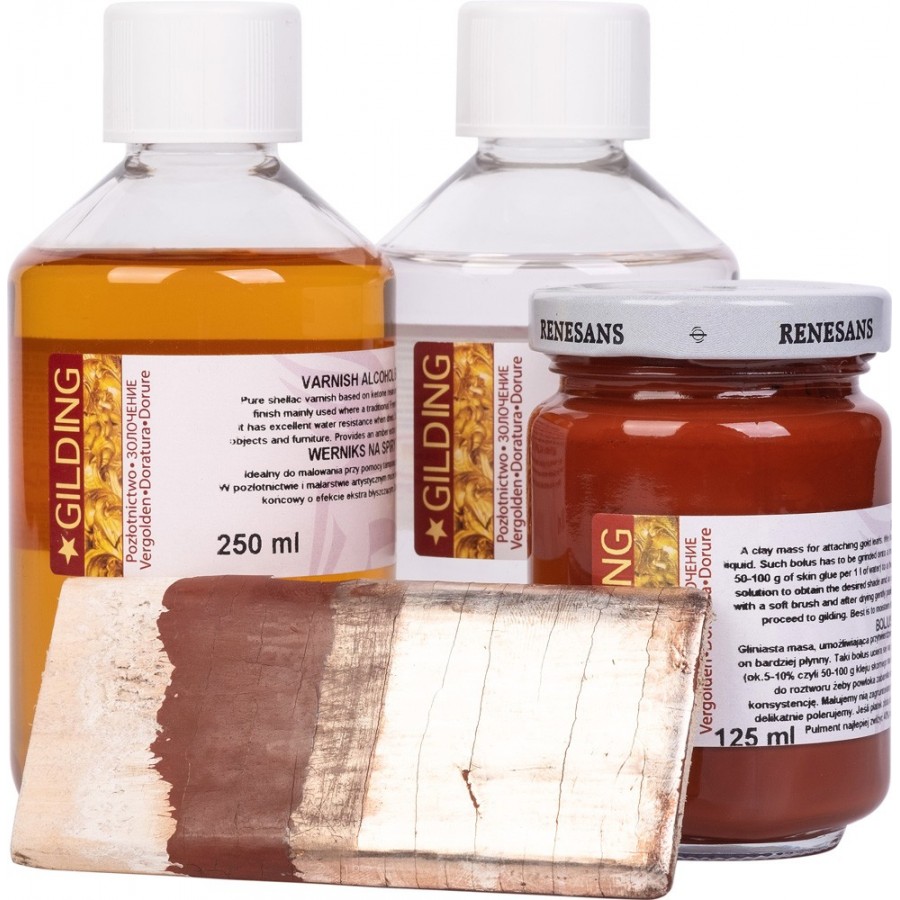
Produkty pozłotnicze
-
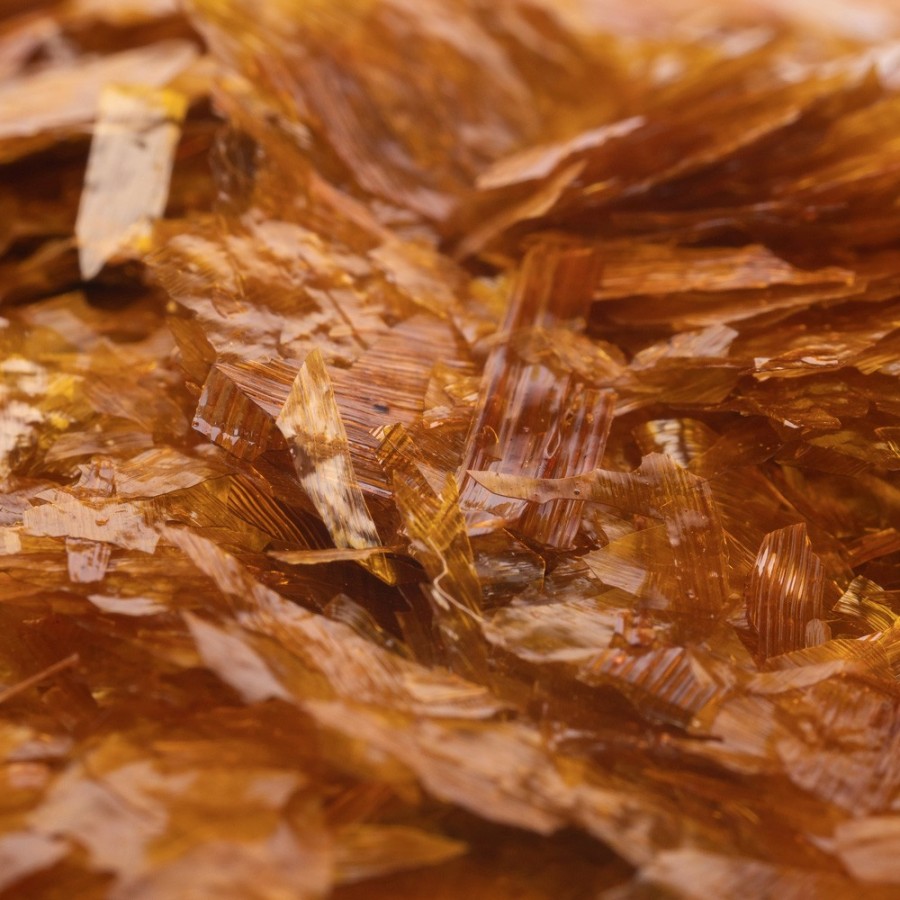
Shellac
<p>Exotic resin. In its raw state, it is red. It is used to produce red paint. It contains 75% resin, 5% wax, and 6% pigment. Yellow, in thin flakes. It dissolves in alcohol, borax, or strong alkalis. When heated with ammonia, it produces water-based varnishes. It differs from other resins in that it does not dissolve in drying oils, as it contains fatty acids rather than resin acids. It melts at a temperature of 100–115°C. Shellac bleaches, but darkens when exposed to air. It should be stored in water.</p> -
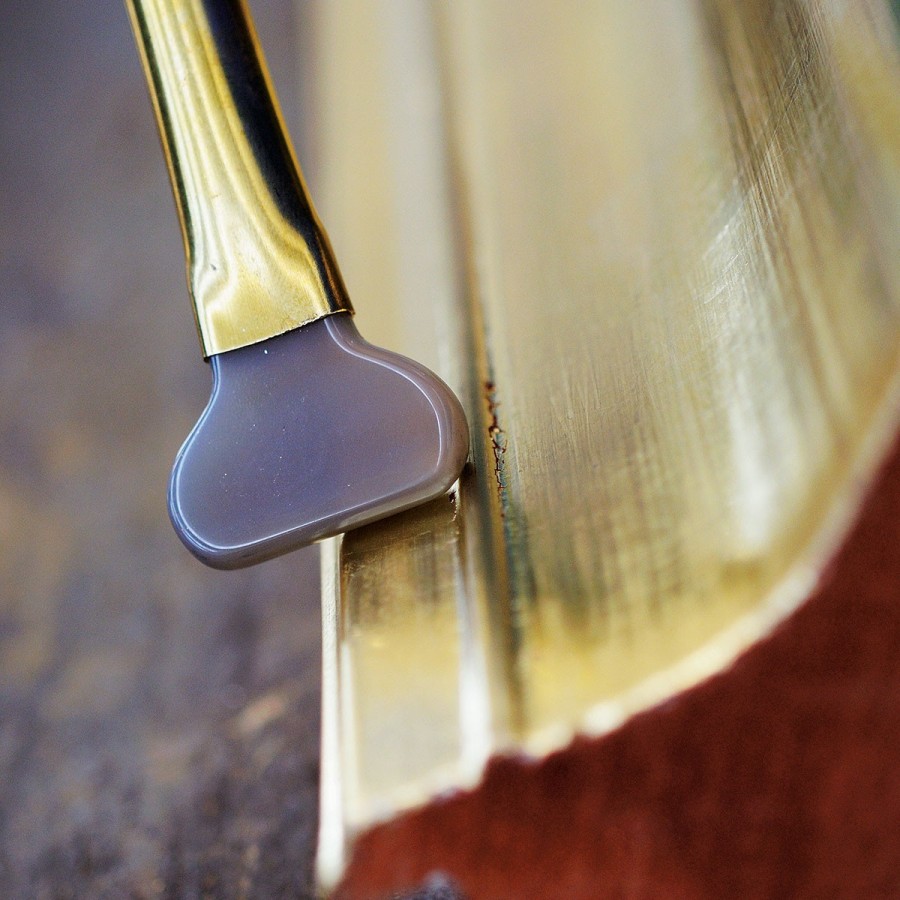
Gilding accessories