

RENPAM1
| Zdjęcie | Opakowania ciężar | Cena | Do koszyka |
|---|---|---|---|
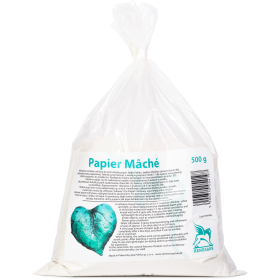
Papier-mâché - mieszanina na bazie celulozy do prac plastycznych, biała i lekka, będąca idealnym zamiennikiem dla tradycyjnej masy papierowej. Należy ją wymieszać z wodą w proporcji około 1:1 dla zwartej konsystencji i dobrze zagnieść do miękkości. Następnie można przystąpić do tworzenia lekkich struktur 3D. Idealnie nadaje się do nadawania kształtu (wówczas pusta w środku struktura 3D) na przedmiotach jak plastikowe butelki, zużyte opakowania, doniczki czy balony. Utrzymując plastyczność daje czas na obróbkę i dopracowanie. Warstwa o grubości ok 3 cm wysycha 24h. Bardzo duża ilość masy papierowej np. w kuli, twardnieje całkowicie dopiero po kilku dniach, a wówczas można ją szlifować, piłować czy drapać. Gotową, wyschniętą pracę można malować powierzchniowo, najlepiej farbami akrylowymi. Po pomalowaniu można zabezpieczyć werniksem. Prosta w użyciu i lekka, schnąca na powietrzu daje nowe możliwości ekspresji. Jednocześnie zachowane zostają: naturalne cechy papieru jak jego delikatność czy dwuwymiarowość. Tę łatwą i ekologiczną technikę stosowały niezliczone kultury na przestrzeni wieków. Od wytwarzania chińskich ceremonialnych i scenicznych masek czy smoków, po produkcję posągów katolickich. Wykonywane z papier-mâché stoły, krzesła, łóżka z baldachimem, pokrywane imitacją laki, macicą perłową i złotem, przenosiły do Europy zapach egzotyki wschodniej aż do połowy XIX wieku. W architekturze przyjęło się tworzenie z masy papierowej detali, sztukaterii, reliefów, czego najlepszym przykładem jest secesyjna, misterna dekoracja sufitowa w Casa Vicens w Barcelonie, autorstwa pioniera katalońskiego modernizmu Antonio Gaudiego. Sztuka zaczyna w pełni korzystać z tej wygodnej techniki już w Surrealizmie (Jean Arp), a Pop Art zawłaszcza ją całkowicie (począwszy od Oldena Claesa Oldenburga). Rzeźby wykonane z papier-mâché zdobią największe kolekcje muzealne, a dzięki utrwaleniu żywicą epoksydową, funkcjonują w przestrzeni miejskiej światowych metropolii. Renesans techniki papier-mâché trwa. Ma ona w sobie duży potencjał i jest łatwa w pracy dla artysty czy amatora. Oferowana przez nas masa papier-mâché jest bardzo zbliżona dla oryginalnej receptury i jest mieszaniną masy papierowej, kleju oraz gipsu i wystarczy dodać do niej wody w odpowiedniej proporcji.